
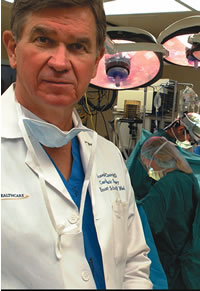
Cardiothoracic surgeon Joe Craver has played a key role in advancing and anchoring Emory's cardiac surgery training program and expanding the volume of patient care and clinical research.
Defining the trust
Paying it forward
By Diane Blanks
It's payback time for Joe Craver.
The Emory Clinic won't be quite the same without the outspoken candor and passionate concern of this veteran cardiothoracic surgeon when he completes his career here at Emory. But even with retirement on the horizon, Craver continues to pay attention to details. Not only is he grooming successors to care for his high-risk patients, but he's also found a way to help ensure that Emory continues to train future generations of this nation's best heart surgeons.
Craver and his wife have established the Joseph M. Craver and Amelia W. Craver Charitable Remainder Trust to support teaching in cardiothoracic surgery. The Emory portion of the Craver endowment is valued at about $2.2 million and will provide annual lectureships as well as financial awards to faculty surgeons for outstanding teaching. An additional goal for the Cravers through this fund is to create an endowed chair in clinical adult cardiac surgery with emphasis on the clinical teacher.
"My mother and dad were both teachers and early on instilled in me the joy of teaching," says Craver, who was recruited to Emory three decades ago. His intersection with Emory in 1974 came at just the right time. He was looking for a position in academic heart surgery with a strong clinical component, and he wanted to return to the South.
The 1970s, Craver remembers, was an exciting new era for heart surgery at Emory, with the advent of coronary angiography and coronary artery bypass surgery, improved valvular substitutes and repair techniques, and recognition of the importance of intraoperative mycardial protection -- "how to take better care of hearts while you repair them," he says.
"Emory's aspiration and commitment at that time to become one of the top five cardiac surgical centers for both patient care and resident training convinced me that this was a place like no other." Thirty years later, he still has no doubt that Emory was the right place. In these years, he has surgically repaired the hearts of more than 15,000 patients and taught more than 90 cardiac surgical fellows the skill and art of heart surgery.
Both parts of his career here bring deep satisfaction to Craver. "You can't place a value on helping save a patient's life. But when you teach a new surgeon, one who's going to go out and save thousands more people, that extends your life's work exponentially."
He worries, though, about the future of the clinical teacher and hopes this gift will actively affirm the importance of the teacher. "I want a person teaching my future surgeon and physician -- a person who's committed to teaching, so that future students and fellows don't depend on machines, video files, computers, or other impersonal learning methods," he says.
The gift also is a form of payback to Emory, in gratitude for the opportunities that Emory provided him. "Emory and The Emory Clinic gave me the opportunity to realize many of my life's goals, so I felt that it was important to make my thanks concrete," Craver says.
"If you believe in something strongly, you should be willing to provide financially for its continuation. My goals and talents seemed to have been right for what Emory needed when I came along, and I feel fortunate that I was given that opportunity. The hard work and the selfless dedication of my colleagues in cardiac surgery, cardiology, and anesthesiology have helped our program at Emory achieve recognition by various specialty boards as being among the top five for cardiac surgical care and professional training -- fulfilling a commitment Emory made 30 years ago. The success of Emory's advances in cardiology and cardiac surgery over the subsequent years have also enabled and made us proud to make this gift."
Joe and Missy Craver believe strongly that through such gifts individuals can make a positive long-term impact, and they hope their gift will motivate others. "It is up to those of us who have invested our careers here to look for giving opportunities at The Emory Clinic and Emory Healthcare. We just need to do it."
Diane Blanks is an editor in health sciences development.
More about Emory's best
Nearly a century ago, two visionary physicians, Edward Campbell Davis and Luther Fischer, saw the need for a new hospital in rapidly growing Atlanta. In 1908, they founded the Davis-Fischer Sanatorium, which in 1931 was renamed Crawford W. Long Memorial Hospital in honor of the Georgia physician who first used ether as an anesthetic during surgery.
REN DAVIS, grandson of Edward Davis and an administrator at Emory Crawford Long Hospital since 1976, recently completed Caring for Atlanta: A History of Emory Crawford Long Hospital, a 312-page history of the medical center. He uses a mixture of anecdotes, historical documents, and images to tie together 95 years of caring, citing such innovations as the first blood bank in Atlanta with RH testing, the first portable myocardial imaging unit, the first sector echocardiography, and, in early 1997 at the Carlyle Fraser Heart Center, 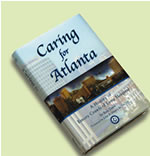 the first cardiac surgery performed on a beating heart. The book is available through Emory Hospital's Institutional Advancement Department by calling 404-686-8191.
A team of scientists from the School of Medicine is one of 10 recipients of the 2003 Doris Duke Innovation in Clinical Research Awards. The awards aim to aid development of "Point-of-Care" diagnostics and therapeutic monitoring tools to care for AIDS patients in resource-poor areas of the world. The Emory investigators, led by MARK FEINBERG, will collaborate with Ethiopian AIDS researchers to develop effective tests to monitor patients with HIV and AIDS by reconfiguring and simplifying commonly used tests to accommodate the circumstances and finances of resource-poor countries. The Emory research team, which also includes ANGELA CALIENDO, FRANCES PRIDDY, and SiLVIJA STAPRANS, will spend a year developing the reconfigured technologies domestically, then will travel to Addis Ababa to field-test the new tools to determine their feasibility and effectiveness in the Ethiopian population.
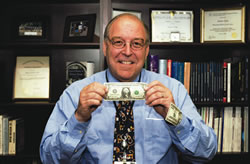
STUART ZOLA, director of Yerkes National Primate Research Center, was recently admitted to the International Brotherhood of Magicians Ring #9 (the Georgia Magic Club). He's good, but getting research dollars takes more than magic, he says. Thanks to the hard work of Yerkes scientists, Yerkes is the third highest recipient of research funding at Emory.
In this issue
From the CEO / LettersNo fear
Consummate chemistry
Moving forward
Noteworthy
On Point:
The toughest decision
Last Word:
Your voice counts in tort reform
Health policy and management professor Edmund "Ned" Becker, Rollins School of Public Health, has been appointed to the Accountability Review Council, which will conduct school progress reviews and issue yearly report cards for the Philadelphia School District. The district includes about 200,000 students and more than 200 schools.
Emory Healthcare has named administrator WILLIAM BORNSTEIN as its first chief quality officer, with responsibility for quality improvement and patient safety initiatives throughout the enterprise.
Pediatrician DANIEL CAPLAN, former long-time director of the Emory Cystic Fibrosis Center, was honored by the Georgia Chapter of the Cystic Fibrosis Foundation for his devotion to the thousands of cystic fibrosis patients he has treated over the past three decades as well as his ongoing research to improve treatment. The 2003 Sixty-Five Roses Ball was held as a tribute to Caplan.
ANN CONNOR, family and community nursing, was one of two nurses named by the Georgia Nurses Association as 2003 Nurse of the Year.
JAMES ELSE has returned to Yerkes as associate director for animal resources, a position he held from 1989 to 1991. He is a leading authority in conservation medicine, specifically the impact of environmental change on veterinary health, public health, and emerging infectious diseases.
JOEL FELNER, associate dean for clinical education in the medical school, was named one of four recipients of the Robert J. Glaser Distinguished Teacher Award from Alpha Omega Alpha and the Association of American Medical Colleges. A mentor in the second-year Problem-Based Learning course, he also developed a popular senior elective that stars Harvey, a mannequin used to study advanced cardiac physical diagnosis.
TAYLOR GRAVES received the 2002 American Geriatrics Society Clinician of the Year Award.
RAY HAYES is now administrator of the 250-bed Budd Terrace nursing home on the campus of Wesley Woods Center.
JOHN HENRY, retired CEO of Emory Hospitals, is now chief operating officer of Grady Hospital.
The Department of Medicine has renamed its house staff program the J. WILLIS HURST Internal Medicine Training Program. The former department chair and now consultant to the division of cardiology also received Emory's Crystal Apple Award for teaching.
KEITH KLUGMAN was elected a fellow in the American Academy of Microbiology, an honorary leadership group that recognizes excellence, originality, and creativity in the microbiological sciences.
REYNALDO MARTORELL received the SINR/Kellogg Prize for International Nutrition, which recognizes excellence in the field of international nutrition research.
The National Institute of Nursing Research awarded MARCIA MCDONNELL a five-year grant of about $2 million for her project "Motivating HIV+ Women: Risk Reduction and ART [antiviral therapy] Adherence."
Pediatrician FLAVIA MERCADO and cardiologist NANETTE WENGER are among the outstanding women physicians featured in "Changing the Face of Medicine," a National Institutes of Health exhibit at the National Library of Medicine in Bethesda, Maryland.
Charles Nemeroff, chair of psychiatry, is the first recipient of the Neuroscience Education Institute's Lifetime Achievement Award in psychopharmacology.
Epidemiologist GODFREY OAKLEY has been elected to the Institute of Medicine of the National Academy of Sciences -- one of the highest honors possible in medicine and health. Often called the "folic acid ambassador" for his work to prevent birth defects resulting from folic acid deficiencies, including paralyzing spina bifida and fatal anencephaly, he advocated adding synthetic folic acid to all grain products. In 1996 the Food and Drug Administration agreed, marking the first change in federal Food Additive Law since 1943. Oakley is also the recent recipient of the Maxwell J. Schleifer Distinguished Service Award from the Exceptional Parent Foundation.
Becky Provine, director of nursing for Wesley Woods Geriatric Hospital, was selected as a 2003 GREAT Ambassador from the Georgia Hospital Association. The ambassador program recognizes health care professionals throughout the state who have shown a commitment to their hospitals, patients, community, and profession.
MARLA SALMON, dean of the Nell Hodgson Woodruff School of Nursing, received an honorary doctor of science degree from the University of Nebraska Medical Center in recognition of her dedication and excellence in nursing and public health.
Radiologist Perry Sprawls received the Harold Johns Medal for excellence in teaching and leadership in international medical physics education from the International Organization of Medical Physics.
LISA TENOVER received the 2003 American Society of Andrology's Distinguished Service Award and was voted as one of America's "top doctors" for 2002 and 2003.
Biostatistics expert LANCE WALLER has been elected a fellow of the American Statistical Association.
Kidney disease researcher XIAONAN WANG received one of six 2003 Normon S. Coplon Extramural Grants, worth $50,000 each for up to three years, for "Gene Therapy of Muscle Wasting from Uremia."
Human geneticist STEPHEN WARREN is one of 15 scientists selected for the National Institute of Child Health and Human Development Hall of Honor. He led the team that discovered the FMR1 gene, which is responsible for fragile X syndrome, the most frequently inherited form of mental retardation.
Recipients of the School of Medicine's 2003 Dean's Teaching Awards are HENRY BLUMBERG (medicine), KAREN DREXLER (psychiatry), JANE GILMORE (neurology), KATE HEILPERN (emergency medicine), ERIC HONIG (medicine), KATHY KINLAW (ethics), KENNETH MINNEMAN (pharmacology), BRYAN NOE (cell biology), SHANTHI SITARAMAN (medicine), and KIRK ZIEGLER (microbiology). The first Edward Underwood Award for teaching excellence went to LINTON HOPKINS (neurology).
The Emory Eye Center is home to a host of editors for national and international medical journals. JEFFREY BOATRIGHT, ROBERT CHURCH, and JOHN NICKERSON are senior editors of the award-winning web-based journal Molecular Vision. DOYLE STULTING is editor-in-chief of Cornea. GEORGE WARING serves as editor-in-chief of the Journal of Refractive Surgery.
Professors ERICA BROWNFIELD (medicine), SHERYL HERON and DENISE LAWE (emergency medicine), and JEFFREY SALOMONE (surgery) received Teaching Innovation Awards.
The School of Medicine's Class of 2007 is the first to have more women (59) than men (55). The average cumulative grade point score is 3.75, and the average MCAT score is 33. Fourteen members of the class were Emory undergraduates.
Copyright © Emory University, 2004. All Rights Reserved.
Send comments to the Editors.
Web version by Jaime Henriquez.